A Tulum Maya ceremony experience can be one of the most personal moments of a Riviera Maya vacation. After a few days of beach clubs, cenotes, and Caribbean sunsets, stepping into a quiet jungle space for a blessing, cacao ritual, temazcal, or sound-focused ceremony can feel completely different. The key is choosing an experience that feels respectful, comfortable, and honestly presented.
Not every ceremony follows the same format, and that is part of what makes planning matter. Some are intimate spiritual wellness experiences inspired by regional traditions. Others are led by Maya cultural practitioners and include prayer, copal incense, traditional instruments, and a personal blessing. Ask good questions before booking, arrive with an open mind, and let the setting set the pace.
What happens during a Tulum Maya ceremony experience?
Most ceremonies begin with a welcome and a simple explanation of the intention for the gathering. You may be invited to set a personal intention, such as gratitude, connection, a new beginning, or simply being present during your trip. There is no need to prepare a dramatic story or know the right words. Showing up with respect is enough.
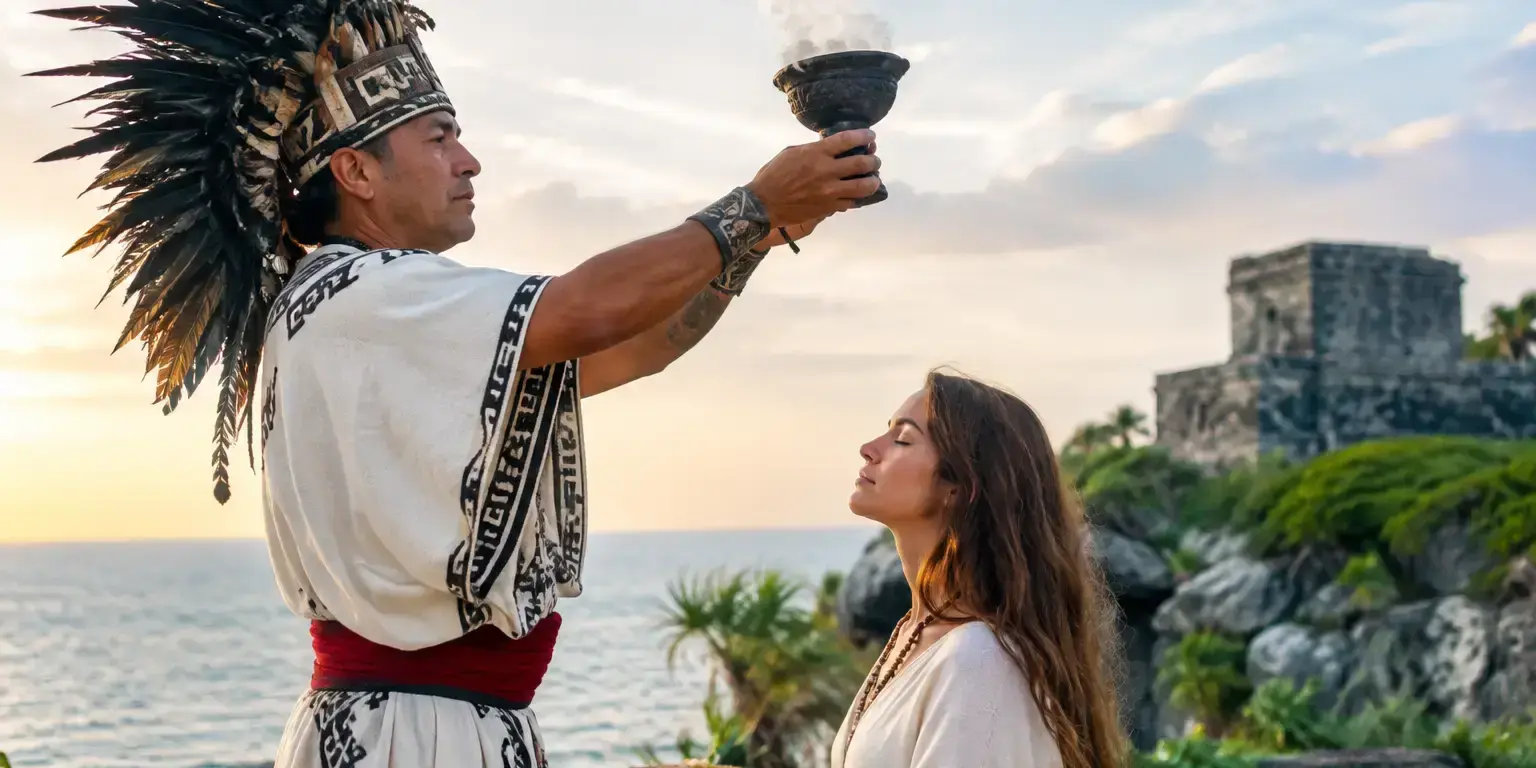
A traditional-style opening often includes copal, a natural resin burned as incense, along with candles, flowers, or an altar representing the four directions. Depending on the host, you may hear a conch shell, drum, rattle, or spoken prayer. Some experiences include cacao served in small cups, while others focus on meditation, breathwork, or sound from instruments such as drums and crystal bowls.
The atmosphere is usually calm rather than theatrical. A thoughtful host will explain what guests are being invited to do and will never pressure anyone to share personal details, participate beyond their comfort level, or treat the experience as a performance for photos.
If you are booking a temazcal ceremony, expect more physical intensity. A temazcal is a traditional sweat lodge, heated with volcanic stones and guided in rounds of heat, steam, herbs, breath, and reflection. It can be powerful, but it is not the best fit for everyone. Guests who are pregnant or who have heart, breathing, blood-pressure, or heat-related health concerns should speak with a medical professional and the ceremony host first.
Respect matters more than checking a box
The Maya world is living culture, not a costume or a backdrop. Travelers sometimes arrive expecting a movie-style ritual with ancient ruins in the background. The better experience is usually quieter and more human: a knowledgeable guide, a small group, clear context, and space to listen.
Be wary of operators who make huge promises about healing, guaranteed transformation, or secret ancient rites. Spiritual experiences can be meaningful, but no ethical host should sell certainty around your emotions, health, relationships, or future. A good provider explains what is included, who leads the ceremony, where it takes place, how long it lasts, and what guests should bring.
It is also worth remembering that Maya communities across the Yucatán Peninsula are diverse. Practices differ by family, community, language, and ceremony leader. There is no single script that represents every Maya tradition. That nuance is a good sign, not a drawback.
How to choose the right ceremony for your group
The right ceremony depends on why you are traveling and how much structure your group wants. Couples may enjoy a sunset blessing or private cacao ceremony after a day in Tulum. Friend groups often like a jungle temazcal paired with a cenote swim. Families may prefer a gentle cultural blessing with an explanation that children can follow.
Before reserving, ask whether the gathering is private or shared. A shared session can be a great value and may create a warm group energy, but it may not suit a honeymoon, birthday, proposal weekend, or a group that wants privacy. Private options give you more flexibility with timing, transportation, language needs, and the overall pace.
Also ask about the location. Tulum has beautiful jungle spaces, but some are farther from the hotel zone than visitors expect. Transportation can make a big difference, especially if the ceremony ends after dark or includes a temazcal, where you will want a relaxed ride back to your resort.
For a smoother plan, consider pairing a ceremony with another nearby activity instead of turning it into an all-day transit schedule. A morning cenote visit followed by a late-afternoon ceremony can work beautifully. If you are staying at an all-inclusive resort, a shorter private experience may be the better choice because it leaves time to enjoy the property, dinner, and the rest of your vacation.
What to wear and bring
Comfort is the priority. Choose light, loose clothing for a blessing, cacao gathering, or sound ceremony. Natural fabrics are nice in the jungle heat, but anything breathable works. Bring a light layer if your event begins near sunset, because mosquitoes can become active and temperatures can feel cooler after rain.
For a temazcal, wear a swimsuit or lightweight clothing you do not mind getting wet. Leave jewelry, watches, and valuables at your hotel. Bring a towel, dry clothes, sandals, water, and a reusable bottle if the operator recommends one. If the ceremony includes a cenote or cold-water rinse after the sweat lodge, ask whether life jackets, showers, and changing areas are available.
Photography deserves a quick conversation too. Some hosts welcome a few photos before or after the ceremony but ask guests not to shoot during prayers or personal moments. Follow their lead. You will remember the feeling better when your phone stays away.
Food, alcohol, and wellness considerations
Arrive hydrated, especially for an outdoor gathering or temazcal. Eat a light meal beforehand unless your host gives different instructions. Heavy food and alcohol are a poor combination with heat, long travel days, or deep relaxation work.
Many visitors plan ceremonies after a lively night out in Tulum, but that can make the experience less enjoyable. If a temazcal is on your itinerary, skip the cocktails the night before and give your body a chance to rest. Tell the host about any health concerns, medications, injuries, or anxiety around enclosed spaces. This is practical information, not something to be embarrassed about.
Cacao ceremonies are generally gentle, but cacao can contain stimulants. If you are sensitive to caffeine or have a relevant medical condition, ask about ingredients and portion size. The best hosts welcome these questions.
Make room for the moment
A ceremony does not need to replace the Riviera Maya adventures on your list. It can add a different kind of memory between a catamaran day, snorkeling trip, archaeological site visit, or jungle excursion. The contrast is often what makes it special: bright Caribbean water in the morning, a quiet jungle gathering later in the day.
At Tulum Riviera Maya Tours, we know vacation time is valuable. A well-planned private outing or small-group experience should feel personal without taking over your entire day. Choose an option with clear timing, reliable transportation, and a guide who treats both guests and local culture with care.
Come curious, not demanding. Wear something comfortable, ask respectful questions, and leave enough space in your schedule to avoid rushing away the moment it ends. Something incredible may be waiting, but it is often the calm, simple parts of a ceremony that stay with you longest.